
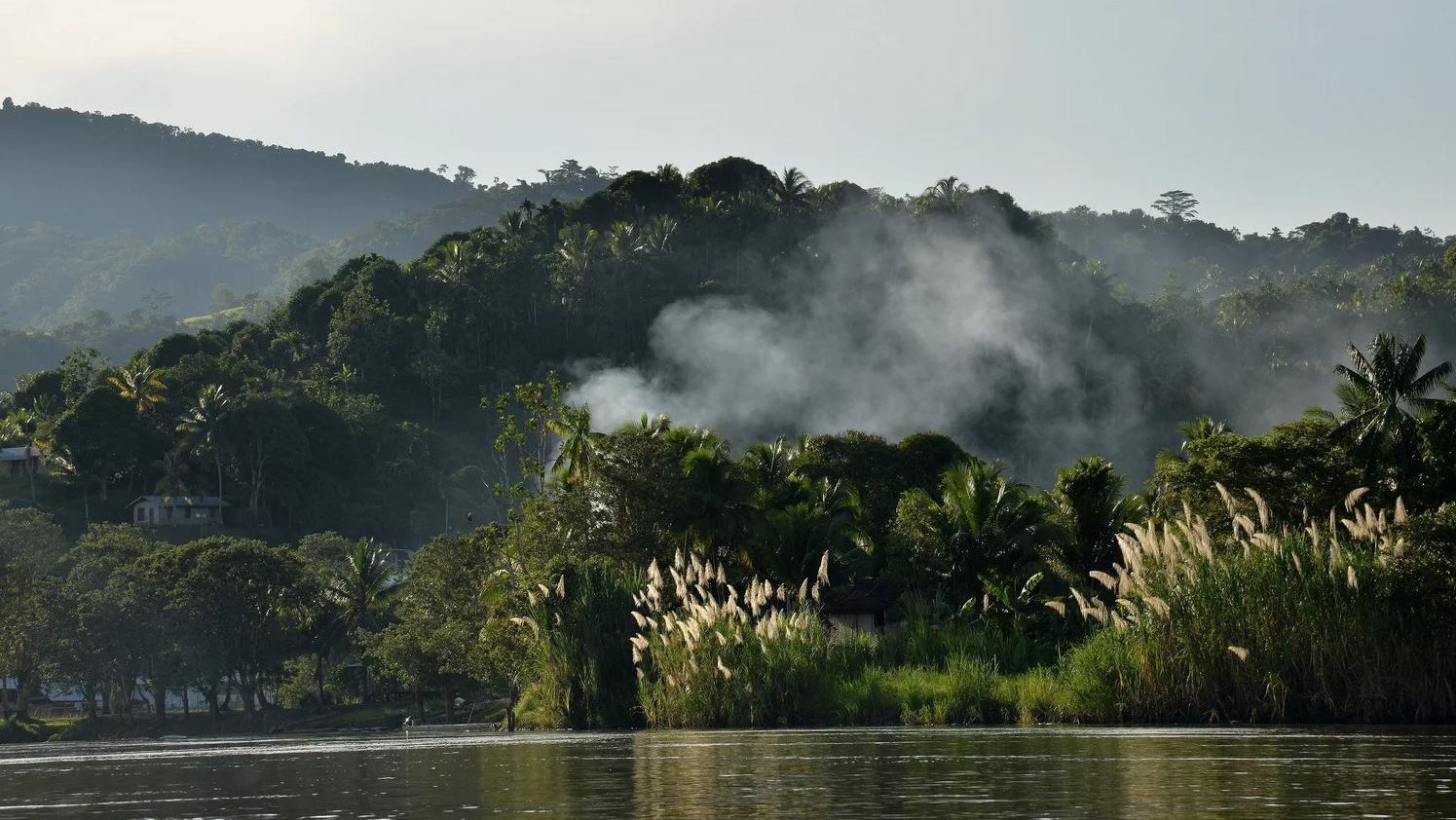
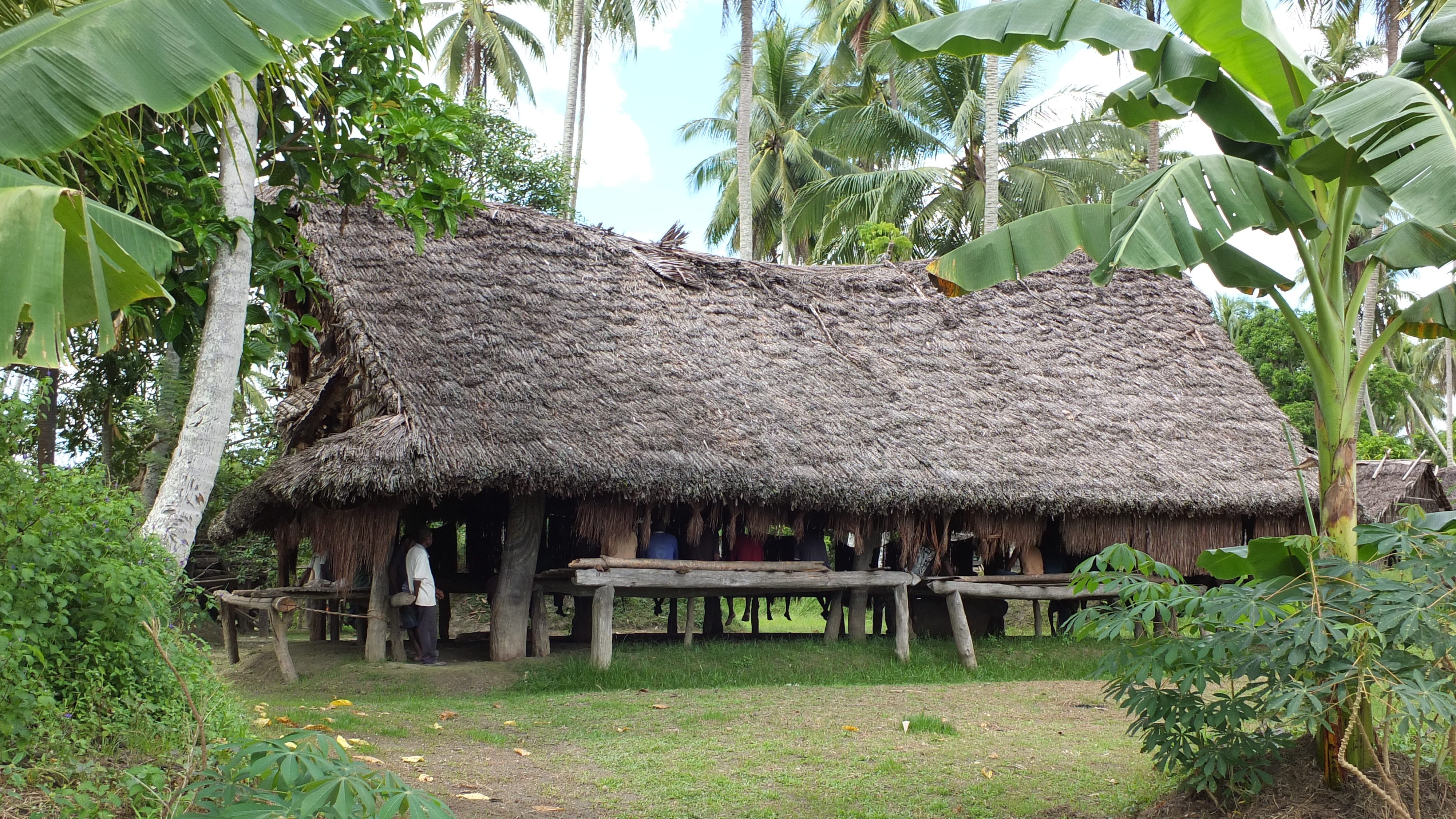
In the lowland riverine environment of Papua New Guinea’s East Sepik Province, the Haus Tambaran (Tok Pisin for “spirit house”) form the monumental centerpiece of villages along the Sepik River and its tributaries. The Sepik basin is characterized by sago swamps, and tropical forests with seasonal flooding and a network of waterways, which have shaped a semi-sedentary lifestyle centered on fishing, sago processing, yam cultivation, and hunting. The houses serve as meeting places for men, sites for rituals and initiations, and storage for sacred objects. They integrate architecture, ritual art, and cosmology, serving as repositories for ancestral power and sites of male initiation.
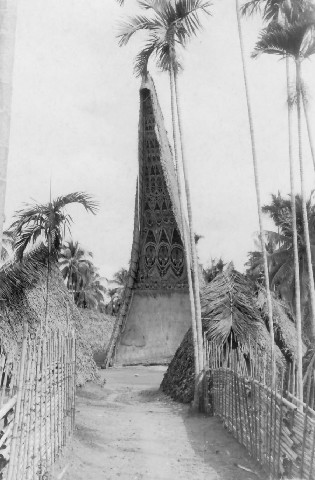
European documentation began in the early 20th century with the German Kaiserin-Augusta-Fluss Expedition (1912–1913) providing the first systematic photographs and descriptions of the structures. Oral traditions link the tambaran cult to ancient origins, with myths recounting men seizing sacred powers from women, though precise pre-contact dating remains elusive. The tradition has persisted in recognizable form for at least 120 years in the written record, and likely centuries earlier.
Architecture and Construction
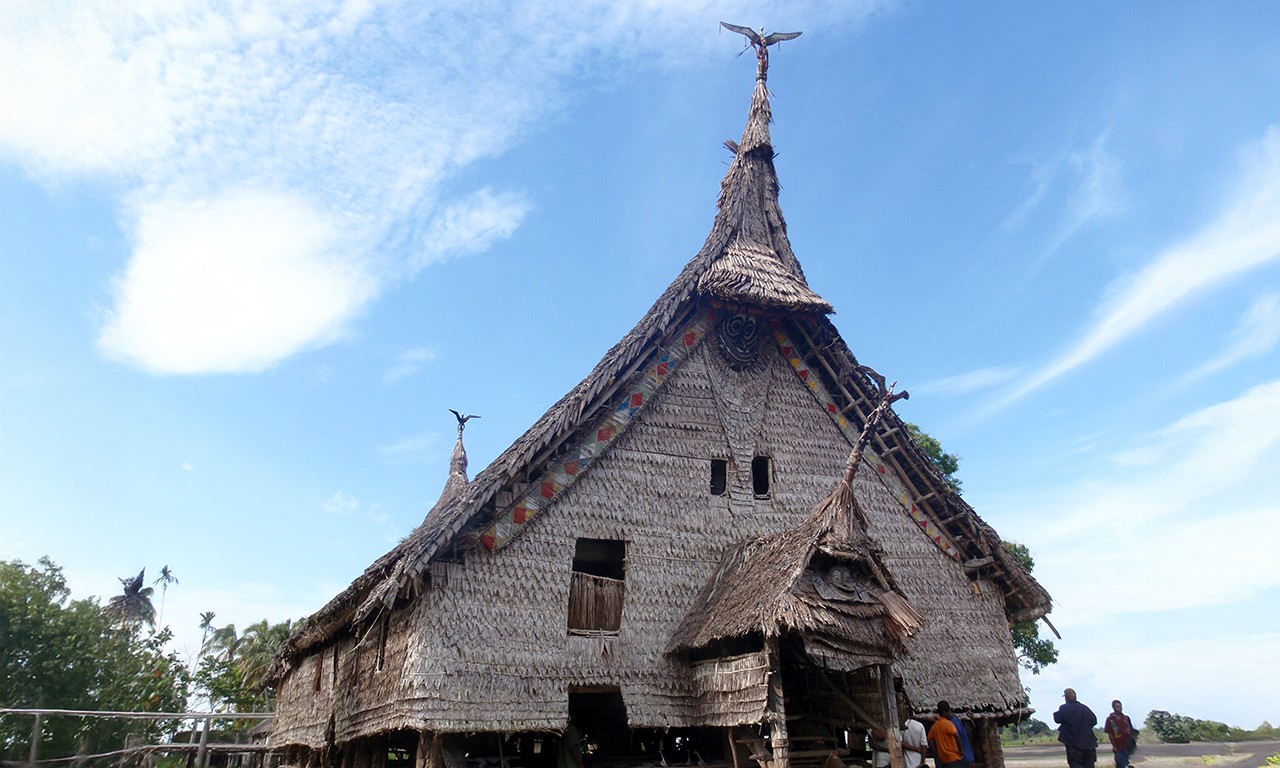
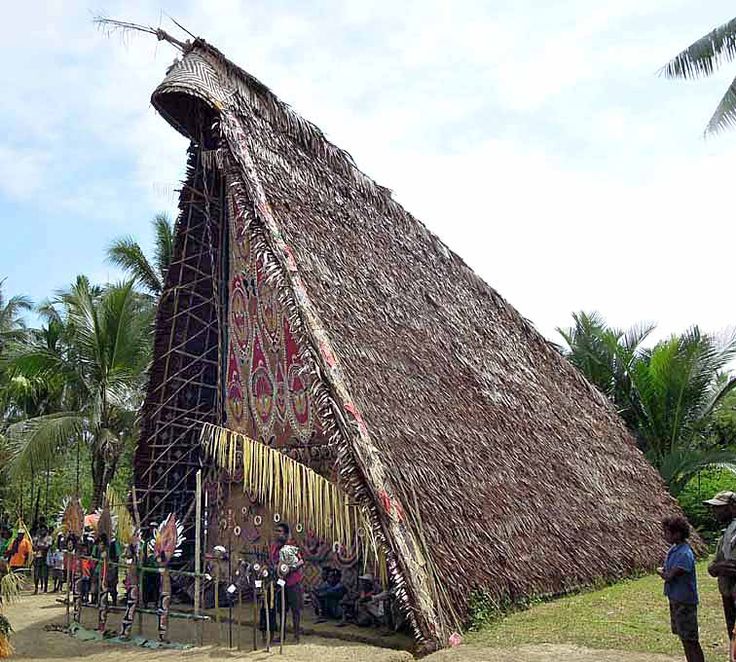
Haus Tambaran exhibit regional variations but share a common dramatic presence. The iconic Abelam (Maprik) style features a tall triangular facade, often 10–20 meters high, with a steeply sloping ridgepole and sago-palm thatch roof descending sharply to the rear. Facades are adorned with painted sago-bark panels (mbai) or woven mats depicting ancestral faces (nggwalndu), spirals symbolizing water and initiation, geometric motifs, and flying-fox figures at the apex. The building rests on carved hardwood posts, with open or screened sides, multi-level interiors, and an elevated platform.
Construction is a communal, ritualized process spanning months or years. The construction materials (hardwood posts, bamboo framing, sago thatch, vines, and natural pigments) are sourced locally. The massive central ridge beam is raised using temporary scaffolding and group effort. Carving of posts, lintels, and gable masks proceeds alongside assembly. Rituals, including yam cultivation, pig sacrifices, and taboos, infuse the work with spiritual potency. Due to termites and humidity, houses are dismantled and rebuilt every 10–30 years, with the renal and reconstruction process forming major ceremonial events.
Anthropological Context
Access to the Haus Tambaran is restricted to initiated men, with entry being forbidden to women and uninitiated boys. The structures house sacred objects: slit drums (garamut), secret flutes (voices of tambaran spirits), masks, ancestor carvings, suspension hooks, and clan treasures. Symbolically, the facade represents a female face or body, the entrance a vagina, and the interior a womb—yet it is the exclusive space for men to “make men” through graded initiations involving seclusion, skin-cutting (evoking crocodile spirits), and revelation of secrets.
The house anchors the tambaran cult, being tied to yam fertility rites where men cultivate and display massive yams as prestige symbols. It serves as a daily gathering place for debate, planning, feasts, and performances of clan histories. Ancestral spirits (nggwal or nggwalndu) embodied in objects and sounds oversee the community, reflecting a worldview where art, architecture, and spirituality intertwine inseparably.
Main Archaeological and Ethnohistorical Investigations
The perishable materials of the structures and their cyclical rebuilding leave limited archaeological evidence and research is primarily ethnoarchaeological and ethnohistorical, focusing on associated durable features and early records.
Because Haus Tambaran are built entirely from perishable materials (hardwood posts, split bamboo, sago thatch, woven mats) and are traditionally dismantled and rebuilt every 10–30 years as part of ritual renewal, they leave almost no permanent archaeological footprint. More durable features which survive include ceremonial mounds and sacred stones.
Ceremonial mounds (often called wak in local languages) are often raised in front of the houses. These low earthen platforms were used in the pre-colonial era for depositing enemy heads, bodies of slain warriors, or ritual offerings after headhunting raids.
Sacred stones (menhirs, stelae, engraved boulders) placed inside or around the houses and dance grounds. They are regarded as dwelling-places of ancestral spirits, repositories of clan power, and sometimes markers of headhunting victims’ burials

Early 20th-century expeditions provide the first formal documentation of these features. The German Kaiserin-Augusta-Fluss Expedition (led by Walter Behrmann) travelled hundreds of kilometres up the Sepik, producing the first detailed maps and photographs of and large numbers of carved posts, painted panels, and other objects still housed in museums today.
Christianity and modernization have diminished the role and number of active spirit houses, yet their influence persists and they endure as powerful symbols of Sepik cultural identity and ingenuity. In recent years, communities in places like Boimsara have actively revived the tradition to pass on values to younger generations, while elements of their design continue to inspire national pride: the front facade of Papua New Guinea’s Parliament building in Port Moresby deliberately echoes the classic Abelam style, and similar influences appear in diplomatic architecture abroad. For archaeologists, anthropologists, and visitors alike, the Haus Tambaran remains a living link to a remarkable heritage, one where perishable materials like wood, thatch, and paint become enduring expressions of cosmology, community, and creativity in one of the world’s most culturally diverse regions.
 Muddy.News