
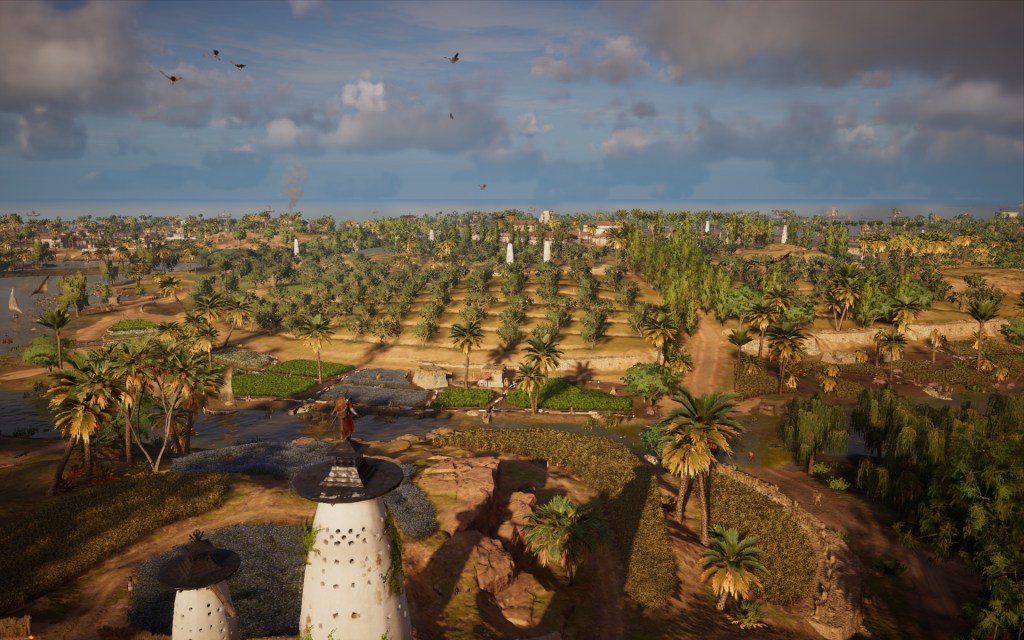
In the scorching sands of Ptolemaic Egypt, players of Assassin’s Creed: Origins (2017) scale the Pharos Lighthouse, wander the labyrinthine streets of Alexandria, and gaze upon the eternal pyramids of Giza. This open-world epic, developed by Ubisoft, takes players to the world of 49–43 BC, the twilight of Cleopatra VII’s reign. Yet beneath the parkour and brutal combat lies a meticulously crafted archaeological tapestry, one that doesn’t just entertain but educates, bridging the gap between textbooks and living history.
The Assassin’s Creed franchise has long positioned itself as “history’s playground,” blending Templar-Assassin fiction with real events across eras: the Third Crusade in the original (2007), Renaissance Italy in Assassin’s Creed II (2009), Viking Britain in Valhalla (2020), and Abbasid Baghdad in the most recent Mirage (2023). Central to the franchise if the developer’s commitment to archaeological authenticity, led by franchise historian Maxime Durand since 2010. Durand’s process begins with a broad review of the time period and its modern cultural place using encyclopedias, books, movies and TV series, and turning to monographs, archives and archaeological reports for research.
This “authenticity over 100% accuracy” philosophy allows creative liberties while grounding narratives in the archaeological evidence, ensuring players feel the weight of history. As Durand notes in interviews, his involvement extends to early concept discussions, narrative development, and credibility checks, and influencing “graphics, music, and behaviour. For Origins, this approach reached a peak, recreating a multicultural Egypt lost to time, and setting a benchmark for the series’ evolution toward educational tools like Discovery Tours.
The game’s authenticity stems from exhaustive research. Game director Ashraf Ismail reveals: “We spent years researching… We had Egyptologists on the team, and historians embedded with us.” Consultants like Perrine Poiron, Evelyne Ferron, and Mark Lehner’s Ancient Egypt Research Associates provided photogrammetry for the Sphinx and other ancient sites including temples. Linguists crafted a proto-Egyptian dialect from Gardiner’s Egyptian Grammar, and other scholarly linguistic research. Durand emphasizes consensus amid debates: noting that whilst academic study is consulted, the team don’t shy away from crazy theories. This rigor transformed Origins into what Egyptologist Chris Naunton calls “the best visualization of ancient Egypt.”
Architecturally, Origins shines due to its fusion of Hellenistic and Egyptian elements, recreating Ptolemaic Egypt with remarkable fidelity. Alexandria’s orderly grid hosts the Pharos (recreated from coin depictions and submerged ruins) a vividly imagined Great Library, and with weathered paving stones evoking urban decay. At the Giza Plateau players can explore and climb the pyramids and their surrounding structures (the white limestone casing is restored and the Sphynx is restored and painted) and the Temple of Hatshepsut at Deir el-Bahri, is brought back to its original glory.
This authenticity extends to cultural vibrancy: Alexandria pulses as a Hellenistic hub of theaters, gymnasia, and libraries, contrasting rural nomes’ pharaonic strongholds. Ethnic diversity emerges in attire, societal roles, and polyglot dialogues, mirroring the era’s syncretism—a depiction still lauded in 2024 teaching series like Naunton’s ‘Playing in the Past.’
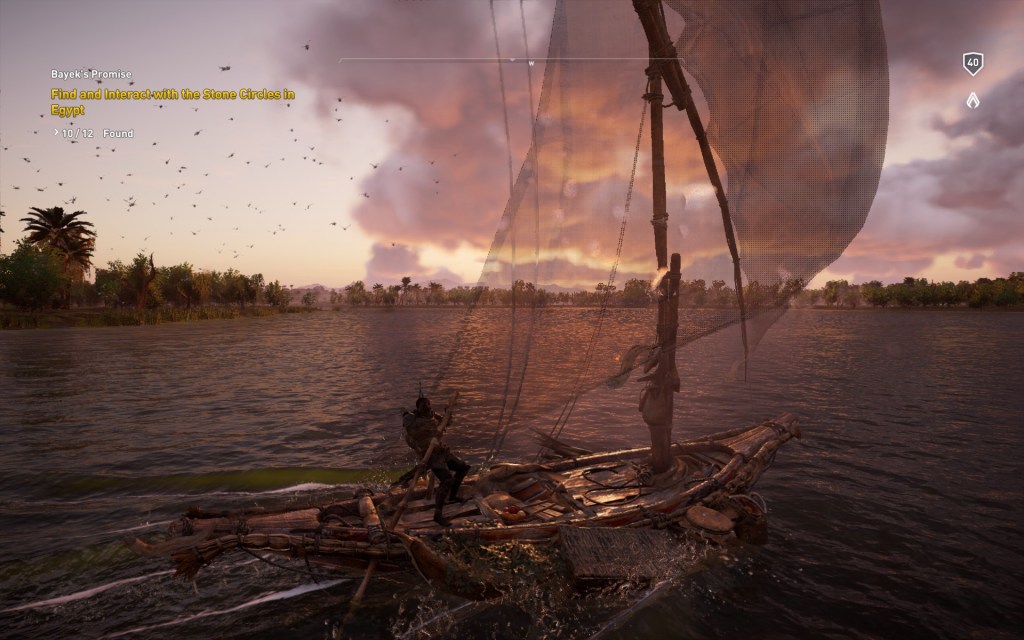
Beyond grand temples and pyramids, Assassin’s Creed: Origins shines in its depiction of Ptolemaic Egypt’s everyday architecture and activities, grounding players in the rhythms of Nile Valley life. The world feels lived-in with mud-brick villages hugging fertile fields, reed boats gliding along the Nile at sunset, and makers producing loaves beside bakeries. The houses adhere to a three-room layout and are scaled to the occupant’s status with wealthier dwellings having a more sprawling layout with gardens and décor. In contrast, Siwa Oasis village evokes Berber influences with palm-thatched roofs. Beyond the safety of the villages the landscape teems with wildlife with flocks of egrets and flamingos, hippos, crocodiles, hyenas and big cats. In some parts of the game world there are lush farmlands with barley emmer wheat, date palms, and papyrus, reflecting the “black lands” fertilized by annual floods. Ptolemaic innovations like rice and pearl millet appear, alongside tools: hoes, wing ploughs, and irrigation via shadufs (levered buckets) and sakias (animal-powered wheels). As Egyptologist Dr. Chris Naunton affirms, ‘The landscape is as it should be. The roads and hills, and even the topography is more or less accurate’—a testament to Ubisoft’s research.
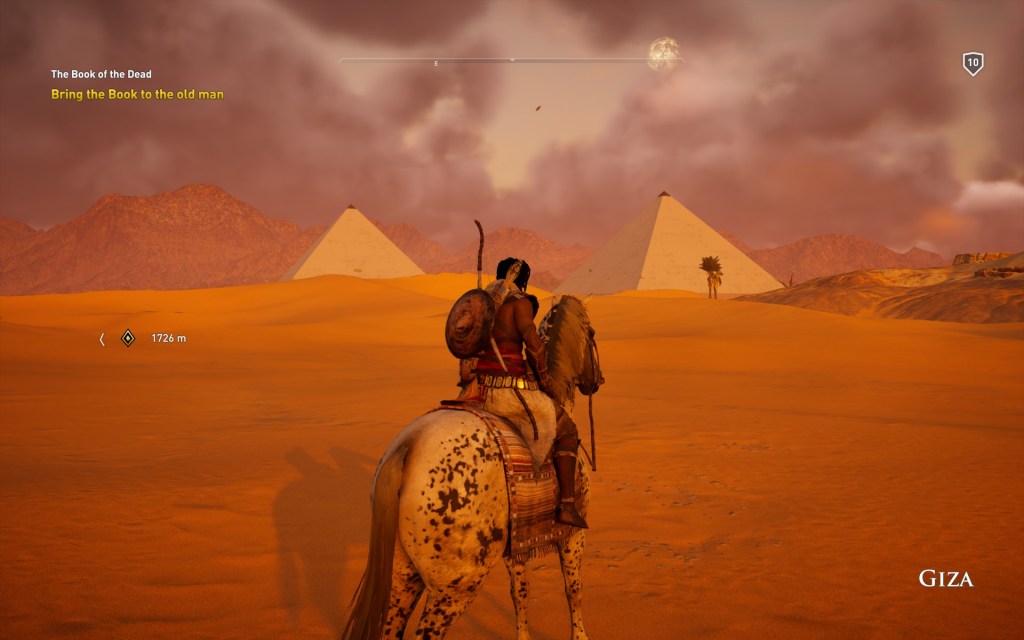
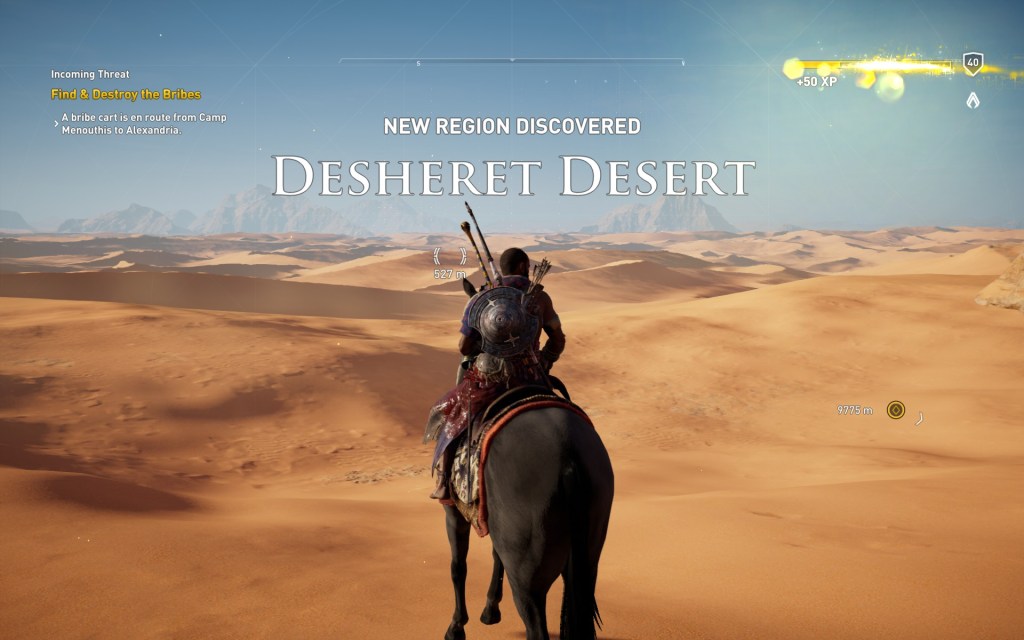
The richness of the world and the variety of the culture encourages player exploration, with a camel ride across miles of desert, fields and towns being an absolute pleasure. The educational potential of the game outside of the core narrative and gameplay experience was recognised by the developers who launched a freely downloadable update “Discovery Tour”. This is a free-roam mode stripped of combat, which transforms the game into an interactive museum, featuring 75 expert-narrated tours.
In Assassin’s Creed: Origins, Ptolemaic Egypt is not merely recreated, it is resurrected. The games development processed blended rigorous archaeological authenticity with immersive gameplay to make history palpably alive. From the great monuments of the pharaohs to the gritty realism of shaduf-irrigated fields and mudbrick hearths, the game honours the deep history of the country, grounding it in the multicultural heartbeat of Cleopatra’s era.
Whatever flaws may be present in more recent franchise offerings, Origins at least proves that video games do not have to be shallow and frivolous experiences, but can be potent bridges to the past, inspiring millions to study real pyramids, decode hieroglyphs, and question narratives. In an era of fleeting digital distractions, it reminds us: authenticity isn’t a constraint—it’s the spark that ignites lifelong curiosity.
 Muddy.News